Why? Because it’s Ethical
This post may contain affiliate links. Please read our disclosure policy.
It is the topic that I am asked about more than any other and it is the one that elicits the most anger from people. Veganism is often found offensive because it is generally misunderstood.
In this article
I wrote this paper in 2007 before I became a vegan activist. I had been vegan for a short time, two years, and found it the focus of many (MANY) discussions in (college) classes. I apparently wrote about it a lot (since I found them saved on my computer?!), but this is my first paper on the subject. It amazes me how much I have grown and how much my views on vegan debate have changed since this paper. It’s pretty bad writing I admit (though I did get an A on it- YAY!) but I can see my own evolution. And now, you can too.
One final note, I added the picture, it was not in my original paper, though I really wish it had been. Oh, one more final final note- after this class was finished I treated my professor to vegan cookies. She penned me out a letter later and mailed it to my home thanking me for the cookies and talking about how she would have never imagined that “normal” food could be vegan and taste awesome. She also told me that she was going to incorporate more vegan meals into her family’s meals. That, dear friends, was amazing.
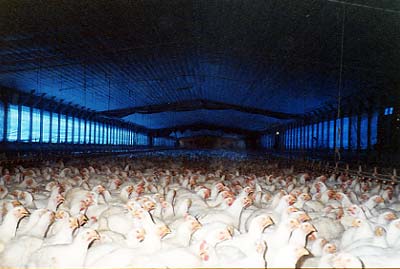
Animals in a Concentrated Animal Feeding Operation (CAFO)
Why? Because it’s Ethical
It is the topic that I am asked about more than any other and it is the one that elicits the most anger from people. Veganism is often found offensive because it is generally misunderstood. A plant-based diet is healthier for humans, the environment and the animals. Moreover, being vegan is not simply the food that is consumed; rather, it is the choice to live without cruelty. I became a vegetarian nine years ago and made the transition to becoming vegan two years ago. People need to adopt a more humane, compassionate approach to their lives by choosing to become vegan.
A plant-based diet, or veganism, is healthier for humans than the counterpart meat-based diet. A vegan has a lower risk of heart disease, high cholesterol, high blood pressure and lower incidents of Type 2 diabetes, Prostate, Colon or Breast cancers. In addition, vegans enjoy lower obesity rates than meat-eaters. A little known health hazard of eating meat is the development of immunity to bacteria and viruses due to antibiotic contamination in our food supply. There is an “
When we think of our health, we must also think about the health of our environment. Without a healthy environment man would not be able to live. Commercial farming, or factory farming, has taken the place of the traditional farming that most people think of when they think of farms. In fact, today factory farming accounts for nearly all of the meat in the United States. “Man farms some 150 million tons of carcass meat every year [. . .]” (Coats 22). The small traditional farms have been shut down by larger operations creating less but bigger farms to meet the ever increasing demands of man.
One problem with these larger operations is the significantly higher amount of waste that is produced. According to the Environmental Protection Agency, “approximately 128 billion pounds of manure is generated by Concentrated Animal Feeding Operations (CAFOs) each year” (“Proposed Regulations”). Manure is produced in such large amounts that the factory farms do not have the land capacity to absorb the excess. Over application of this manure onto the land causes runoffs of manure onto nearby fields and streams. This allows waste nutrients, such as Nitrogen and Phosphorus, to enter our water systems. This increase in nutrients causes the depletion of vital oxygen in the water. Without oxygen, fish and other aquatic life can no longer survive in the water, dying by the thousands each year (Coats). In addition, the waste contains harmful bacteria and antibiotic residues which can cause disease and illness in humans. This waste contamination is only a small part of larger environmental destruction that processing animals, whether for food or products, causes. We can stop this needless pollution, contamination, and related illnesses by evolving into a vegan society.
The commercialism of farming has been torturous not only to the environment, but to the animals involved. The farms have become less like farms and become more like factories. The animals contained inside these factories are manufactured from conception to adulthood for one purpose – to kill. Animals are denied their natural instincts and the freedom to live as nature intended. If man believes that a dog or cat has the ability to feel pain then it stands to reason that a farm animal has the same nerves in their bodies. “Animals have sensory equipment that allows them to react appropriately to their environments” (Taylor 27). Man has judged animals based on standards set for humans. “But judged by the standards of an animal, how many things can a human do well? Can a human fly like an eagle [. . .]? Can a human smell or hear as well as a dog?” (Taylor 29). But still, the farm animal is treated as a business commodity with no regard to these feelings.
Continue reading the paper (complete with sources!) after the jump.
[box]
 KD Traegner is an unapologetic vegan. She believes that animals besides us, and including us humans, have the fundamental right to a natural and free life. She is compassionate, believing that her choices matter, and she takes that power seriously. Her mission is simple: to bring the vegan evolution to the masses, connect vegans with other vegans, and support vegans in their own lives, as well as their advocacy work. She does that through the use of her website, Your Daily Vegan, and her big mouth. [/box]
Why? Because it’s Ethical continued…
In the case of a factory pig, the animal is mutilated when it is one week old to prevent future behavioral problems. Without anesthetics the week old pig’s tail is cut off, the male pigs have their testicles cut off, eight teeth are cut out and identification notches are cut into the ears. As the animal begins its life in torture, so it continues its life in torture. “A factory breeding sow averages [. . .] ten litters in a lifetime. With ten or eleven piglets per litter, she brings 100-110 piglets into the system during the first four to five years of her life” (Coats 34). The sow can become pregnant using several different methods. The most horrific method of impregnation involves the surgical implant of embryos from genetically desirable sows to ordinary sows. The procedure means that the genetically desirable sow or “supersow” is cut open and sewn back up several times each year to retrieve the embryos (Coats). Once impregnated, the gestating sows are confined to a pen no larger than the pig itself with no room to turn around. This is their home until they give birth and the cycle begins anew until the sow can no longer bear the burden of repeated reproduction. These pigs live in cages called battery cages with wire mesh floors and no bedding. With no comforts to speak of, the life of a pig is dismal until they are sent to the slaughterhouse.
The factory pig is only one example of the barbaric conditions in which humans force our “food” to live in. The dairy cow is fed antibiotics and medicated food to produce abnormally high levels of milk. Deemed worthless, male calves are sold at auctions for veal farming since they cannot produce milk. Cattle are factory bred and raised on industrial waste feed, forcing normally vegetarian animals to be cannibals. Chickens are debeaked, overcrowded and forced to reproduce at abnormal and astronomically high rates. If a baby chick is born male, he is murdered and discarded, likely ending up as a supplement to the food supply for the other chickens. Even the honeybee’s life has been cruelly manipulated by man for their production of honey. “Confinement in small cages, overcrowding, physical stress and injury, mutilation, and gross psychological deprivation are the inhumane price which the animals are forced to pay” (Coats 46). We must stop to observe and start to excogitate on the barbaric behaviors that could, and should, be eliminated by becoming vegan.
Tragically, the factory farm animals are not the only animals that meet horrible fates for the pleasure of man. Indeed, man uses the animal in any manner that he chooses. From skinning for fur or hide to experimentation, the animal used by man has a hellish life to look forward to. A common belief among humans is that the “animals are here for our use” or “animals do not have the same rights as us”. But just the opposite is true. “We are the species uniquely capable of imagination, rationality, and moral choice – and that is precisely why we are under the obligation to recognize and respect the rights of animals” (qtd. in Coats 26).
The animal rights movement is not a new one. This idea of animal rights has been debated by many philosophers over the years. One fact we cannot debate, is that the animal is capable of life. Meaning, animal life is similar to that of a human. They live within a societal structure, sometimes staying with family members all their lives. Some animals mate only once in a lifetime. “The essence of our moral obligations to any animal [. . .] is to treat that animal as having the right to live the kind of life that its nature dictates” (qtd in Taylor 49). Humans have abused their rights by asserting that all living things have a lesser value than themselves. Why should we give animals the same rights and morals as humans? When asked this question Carla Bennett, columnist for the People for the Ethical Treatment of Animals, stated:
An animal’s inability to understand and adhere to our rules is as irrelevant as a child’s or a person with a developmental disability’s inability to do so. Like small children, most animals are not capable of choosing to change their behavior, but adult human beings have the intelligence to choose between behavior that hurts others and behavior that doesn’t.
When examining moral rights, we must remember that moral rights are not exclusive to just humans. Veganism represents the rights and morals that have been, and continue to be, neglected by the majority.
Becoming vegan has been a journey for me. It was in 1998 that I met my cat, Scowt, who was in the engine of my car. With a broken leg and a tooth embedded in the top of her mouth, she wasn’t the first cat that I met who had been abused. She wasn’t even the first that I had taken in. The veterinary office told me that most likely she had been kicked or hit in the face with something, which caused the tooth to become embedded in her mouth. I can remember wondering how someone could be so cruel. I would put it together much later how much that moment affected me. There is a perceived line between loving one type of animal and eating another. Looking into the face of that needlessly abused cat, I realized how absurd that belief was. It was then that I became vegetarian. That was 9 years ago. Today, I am a proud vegan. I have lost 45 pounds, became environmentally aware and respectful, and incorporated cruelty-free living into my everyday life.
Being vegan begins with the realization that animals are not ours to eat, kill, wear, or experiment with. We would decrease levels of serious illnesses by evolving to a plant-based, vegan diet. The damage done by factory farms could begin to heal. But most importantly, our animals could begin to live life without horrific torture. Being vegan is not about being radical – it is about being ethical.
Works Cited
“Learn How to Live in Harmony with Animals.” Ask Carla.com. 10 April 2007. <http://www.askcarla.com/answers.asp? QuestionandanswerID=278>.
Coats, C. David. Old MacDonald’s Factory Farm. 1. New York: The Continuum Publishing Company, 1989.
Fox, Dr. Michael W. Agricide. 2nd. Malabar, Florida: Krieger Publishing Company, 1996.
“Proposed Regulations to Address Water Pollution from Concentrated Animal Feeding Operations.” EPA Publications – Office of Waste Management. 04/2001. US Environmental Protection Agency. 10 Apr 2007 <http://www.epa.gov/npdes/pubs/CAFO-brochure3.pdf>.
Taylor, Angus MacDonald. Magpies, Monkeys and Morals. 1st. Peterborough, Ontario, Canada: Broadview Press, 1999.
“Waste: Information & Resources.” Grace Factory Farm Project. 04/12/2007. Grace Factory Farm Project. 9 Apr 2007 <http://factoryfarm.org/topics/waste/>.
You might also like



Leave a reply
HELLO! I'm KD Angle-Traegner.

Writer, activist, and founder of Four Urban Paws Sanctuary. I’m on a mission to help people live a vegan life. Read more about KD…
Why? Because it’s Ethical
This post may contain affiliate links. Please read our disclosure policy.
It is the topic that I am asked about more than any other and it is the one that elicits the most anger from people. Veganism is often found offensive because it is generally misunderstood.
In this article
I wrote this paper in 2007 before I became a vegan activist. I had been vegan for a short time, two years, and found it the focus of many (MANY) discussions in (college) classes. I apparently wrote about it a lot (since I found them saved on my computer?!), but this is my first paper on the subject. It amazes me how much I have grown and how much my views on vegan debate have changed since this paper. It’s pretty bad writing I admit (though I did get an A on it- YAY!) but I can see my own evolution. And now, you can too.
One final note, I added the picture, it was not in my original paper, though I really wish it had been. Oh, one more final final note- after this class was finished I treated my professor to vegan cookies. She penned me out a letter later and mailed it to my home thanking me for the cookies and talking about how she would have never imagined that “normal” food could be vegan and taste awesome. She also told me that she was going to incorporate more vegan meals into her family’s meals. That, dear friends, was amazing.
Animals in a Concentrated Animal Feeding Operation (CAFO)
Why? Because it’s Ethical
It is the topic that I am asked about more than any other and it is the one that elicits the most anger from people. Veganism is often found offensive because it is generally misunderstood. A plant-based diet is healthier for humans, the environment and the animals. Moreover, being vegan is not simply the food that is consumed; rather, it is the choice to live without cruelty. I became a vegetarian nine years ago and made the transition to becoming vegan two years ago. People need to adopt a more humane, compassionate approach to their lives by choosing to become vegan.
A plant-based diet, or veganism, is healthier for humans than the counterpart meat-based diet. A vegan has a lower risk of heart disease, high cholesterol, high blood pressure and lower incidents of Type 2 diabetes, Prostate, Colon or Breast cancers. In addition, vegans enjoy lower obesity rates than meat-eaters. A little known health hazard of eating meat is the development of immunity to bacteria and viruses due to antibiotic contamination in our food supply. There is an “
When we think of our health, we must also think about the health of our environment. Without a healthy environment man would not be able to live. Commercial farming, or factory farming, has taken the place of the traditional farming that most people think of when they think of farms. In fact, today factory farming accounts for nearly all of the meat in the United States. “Man farms some 150 million tons of carcass meat every year [. . .]” (Coats 22). The small traditional farms have been shut down by larger operations creating less but bigger farms to meet the ever increasing demands of man.
One problem with these larger operations is the significantly higher amount of waste that is produced. According to the Environmental Protection Agency, “approximately 128 billion pounds of manure is generated by Concentrated Animal Feeding Operations (CAFOs) each year” (“Proposed Regulations”). Manure is produced in such large amounts that the factory farms do not have the land capacity to absorb the excess. Over application of this manure onto the land causes runoffs of manure onto nearby fields and streams. This allows waste nutrients, such as Nitrogen and Phosphorus, to enter our water systems. This increase in nutrients causes the depletion of vital oxygen in the water. Without oxygen, fish and other aquatic life can no longer survive in the water, dying by the thousands each year (Coats). In addition, the waste contains harmful bacteria and antibiotic residues which can cause disease and illness in humans. This waste contamination is only a small part of larger environmental destruction that processing animals, whether for food or products, causes. We can stop this needless pollution, contamination, and related illnesses by evolving into a vegan society.
The commercialism of farming has been torturous not only to the environment, but to the animals involved. The farms have become less like farms and become more like factories. The animals contained inside these factories are manufactured from conception to adulthood for one purpose – to kill. Animals are denied their natural instincts and the freedom to live as nature intended. If man believes that a dog or cat has the ability to feel pain then it stands to reason that a farm animal has the same nerves in their bodies. “Animals have sensory equipment that allows them to react appropriately to their environments” (Taylor 27). Man has judged animals based on standards set for humans. “But judged by the standards of an animal, how many things can a human do well? Can a human fly like an eagle [. . .]? Can a human smell or hear as well as a dog?” (Taylor 29). But still, the farm animal is treated as a business commodity with no regard to these feelings.
Continue reading the paper (complete with sources!) after the jump.
[box]
KD Traegner is an unapologetic vegan. She believes that animals besides us, and including us humans, have the fundamental right to a natural and free life. She is compassionate, believing that her choices matter, and she takes that power seriously. Her mission is simple: to bring the vegan evolution to the masses, connect vegans with other vegans, and support vegans in their own lives, as well as their advocacy work. She does that through the use of her website, Your Daily Vegan, and her big mouth. [/box]
Why? Because it’s Ethical continued…
In the case of a factory pig, the animal is mutilated when it is one week old to prevent future behavioral problems. Without anesthetics the week old pig’s tail is cut off, the male pigs have their testicles cut off, eight teeth are cut out and identification notches are cut into the ears. As the animal begins its life in torture, so it continues its life in torture. “A factory breeding sow averages [. . .] ten litters in a lifetime. With ten or eleven piglets per litter, she brings 100-110 piglets into the system during the first four to five years of her life” (Coats 34). The sow can become pregnant using several different methods. The most horrific method of impregnation involves the surgical implant of embryos from genetically desirable sows to ordinary sows. The procedure means that the genetically desirable sow or “supersow” is cut open and sewn back up several times each year to retrieve the embryos (Coats). Once impregnated, the gestating sows are confined to a pen no larger than the pig itself with no room to turn around. This is their home until they give birth and the cycle begins anew until the sow can no longer bear the burden of repeated reproduction. These pigs live in cages called battery cages with wire mesh floors and no bedding. With no comforts to speak of, the life of a pig is dismal until they are sent to the slaughterhouse.
The factory pig is only one example of the barbaric conditions in which humans force our “food” to live in. The dairy cow is fed antibiotics and medicated food to produce abnormally high levels of milk. Deemed worthless, male calves are sold at auctions for veal farming since they cannot produce milk. Cattle are factory bred and raised on industrial waste feed, forcing normally vegetarian animals to be cannibals. Chickens are debeaked, overcrowded and forced to reproduce at abnormal and astronomically high rates. If a baby chick is born male, he is murdered and discarded, likely ending up as a supplement to the food supply for the other chickens. Even the honeybee’s life has been cruelly manipulated by man for their production of honey. “Confinement in small cages, overcrowding, physical stress and injury, mutilation, and gross psychological deprivation are the inhumane price which the animals are forced to pay” (Coats 46). We must stop to observe and start to excogitate on the barbaric behaviors that could, and should, be eliminated by becoming vegan.
Tragically, the factory farm animals are not the only animals that meet horrible fates for the pleasure of man. Indeed, man uses the animal in any manner that he chooses. From skinning for fur or hide to experimentation, the animal used by man has a hellish life to look forward to. A common belief among humans is that the “animals are here for our use” or “animals do not have the same rights as us”. But just the opposite is true. “We are the species uniquely capable of imagination, rationality, and moral choice – and that is precisely why we are under the obligation to recognize and respect the rights of animals” (qtd. in Coats 26).
The animal rights movement is not a new one. This idea of animal rights has been debated by many philosophers over the years. One fact we cannot debate, is that the animal is capable of life. Meaning, animal life is similar to that of a human. They live within a societal structure, sometimes staying with family members all their lives. Some animals mate only once in a lifetime. “The essence of our moral obligations to any animal [. . .] is to treat that animal as having the right to live the kind of life that its nature dictates” (qtd in Taylor 49). Humans have abused their rights by asserting that all living things have a lesser value than themselves. Why should we give animals the same rights and morals as humans? When asked this question Carla Bennett, columnist for the People for the Ethical Treatment of Animals, stated:
An animal’s inability to understand and adhere to our rules is as irrelevant as a child’s or a person with a developmental disability’s inability to do so. Like small children, most animals are not capable of choosing to change their behavior, but adult human beings have the intelligence to choose between behavior that hurts others and behavior that doesn’t.
When examining moral rights, we must remember that moral rights are not exclusive to just humans. Veganism represents the rights and morals that have been, and continue to be, neglected by the majority.
Becoming vegan has been a journey for me. It was in 1998 that I met my cat, Scowt, who was in the engine of my car. With a broken leg and a tooth embedded in the top of her mouth, she wasn’t the first cat that I met who had been abused. She wasn’t even the first that I had taken in. The veterinary office told me that most likely she had been kicked or hit in the face with something, which caused the tooth to become embedded in her mouth. I can remember wondering how someone could be so cruel. I would put it together much later how much that moment affected me. There is a perceived line between loving one type of animal and eating another. Looking into the face of that needlessly abused cat, I realized how absurd that belief was. It was then that I became vegetarian. That was 9 years ago. Today, I am a proud vegan. I have lost 45 pounds, became environmentally aware and respectful, and incorporated cruelty-free living into my everyday life.
Being vegan begins with the realization that animals are not ours to eat, kill, wear, or experiment with. We would decrease levels of serious illnesses by evolving to a plant-based, vegan diet. The damage done by factory farms could begin to heal. But most importantly, our animals could begin to live life without horrific torture. Being vegan is not about being radical – it is about being ethical.
Works Cited
“Learn How to Live in Harmony with Animals.” Ask Carla.com. 10 April 2007. <http://www.askcarla.com/answers.asp? QuestionandanswerID=278>.
Coats, C. David. Old MacDonald’s Factory Farm. 1. New York: The Continuum Publishing Company, 1989.
Fox, Dr. Michael W. Agricide. 2nd. Malabar, Florida: Krieger Publishing Company, 1996.
“Proposed Regulations to Address Water Pollution from Concentrated Animal Feeding Operations.” EPA Publications – Office of Waste Management. 04/2001. US Environmental Protection Agency. 10 Apr 2007 <http://www.epa.gov/npdes/pubs/CAFO-brochure3.pdf>.
Taylor, Angus MacDonald. Magpies, Monkeys and Morals. 1st. Peterborough, Ontario, Canada: Broadview Press, 1999.
“Waste: Information & Resources.” Grace Factory Farm Project. 04/12/2007. Grace Factory Farm Project. 9 Apr 2007 <http://factoryfarm.org/topics/waste/>.
You might also like
Leave a reply
HELLO! I'm KD Angle-Traegner.
Writer, activist, and founder of Four Urban Paws Sanctuary. I’m on a mission to help people live a vegan life. Read more about KD…